I’ve spent the last couple of years watching people stare at their screens in absolute frustration, muttering about how “the machine just doesn’t get it.” It’s a scene I see play out constantly: a business owner or a writer sits down, types a quick sentence into a smart interface, and then watches in horror as the system spits out a response that has the personality of a wet paper towel. Let’s talk about few Prompt mistakes which people do on daily basis that gives them low quality results.
Most people assume the technology is just overhyped. They think, “Well, it’s just not smart enough yet.” But having lived and breathed these digital workflows for a long time now, I can tell you that the problem almost never lies with the engine. It’s the steering.
We’ve been conditioned by decades of Google searches to be as brief as possible. We use keywords like we’re sending a telegram in 1920. But these modern intelligent systems don’t want keywords they want context. If you’re getting low-quality, robotic, or just plain weird results, you’re likely falling into one of a handful of very common traps. Here is how to stop getting garbage back from your digital assistant.
The “Vending Machine” Fallacy
The biggest mistake I see is people treating the system like a vending machine. You put in a coin (a short command), and you expect a finished product to pop out.
“Write a blog post about coffee.”
That is a vending machine command. If you send that, the system has to guess everything. It guesses your tone, it guesses your audience, it guesses your specific angle. Since it’s programmed to be generally helpful, it picks the most “average” version of all those things. The result? A boring, C-minus essay that sounds like every other generic blog post on the internet.
To get high-quality work, you have to stop being a “user” and start being a “director.” A director doesn’t just say “Act.” They explain the scene, the emotion, and the goal.
The Missing Context: The “Who” and the “Why”
If I walked up to you in a coffee shop and said, “Give me advice,” you’d have no idea where to start. Advice on your taxes? Your marriage? How to fix a leaky faucet?
I see this exact mistake in about 80% of the instructions people write. They leave out the background. Every single time I sit down to work with a smart tool, I start with a “brain dump” of context.
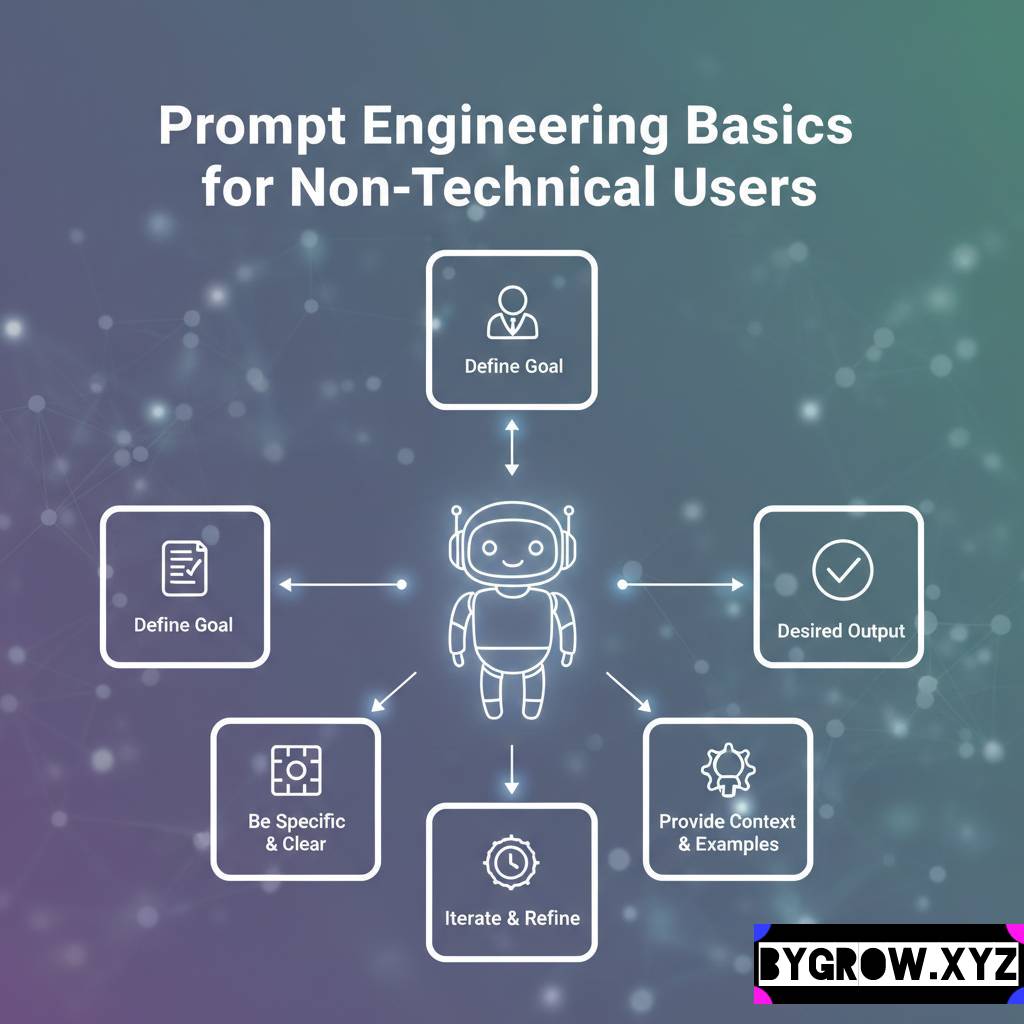
- Who am I? (e.g., A boutique gym owner who prioritizes community over heavy lifting.)
- Who is this for? (e.g., Busy moms who haven’t worked out in five years and feel intimidated by the gym.)
- What is the goal? (e.g., To make them feel welcome and get them to sign up for a free “no-pressure” orientation.)
If you don’t provide those three pillars, the system will default to “Generic Professional.” And honestly, in 2026, “Generic Professional” is the quickest way to get ignored.
The “One-Shot” Trap: Expecting Perfection on Step One
In my experience, the best results never come from the first interaction. There’s this weird pressure we put on ourselves to write the “perfect” set of instructions so the machine gets it right on the first try.
That’s not how real collaboration works.
Think of it like working with a new hire. You wouldn’t give them a task, walk away for three hours, and then fire them if the first draft wasn’t perfect. You’d look at the draft, give feedback, and say, “This is great, but let’s make the intro a bit more punchy and remove the technical jargon in section three.”
The “One-Shot” trap is a productivity killer. I usually expect to go back and forth at least three or four times. I’ll ask the system to “Give me three different angles for this headline,” then I’ll pick one and say, “Okay, let’s build on option two, but change the tone to be more cynical.”
The Real-Life Example: Pete’s Landscaping Letter
My friend Pete runs a local landscaping business. Last month, he was trying to write a letter to his long-time clients to explain a 10% price increase. He was stressed about it.
YOU CAN ALSO READ:
How businesses misuse AI and lose trust: Useful TipsHe typed in: “Write a letter to my customers telling them I’m raising prices by 10% because of inflation.”
The result was cold and corporate. It sounded like it came from a bank. It started with “Dear Valued Customer” and used phrases like “due to current economic conditions.” Pete hated it. He almost gave up.
I told him to try again, but this time, I told him to speak to the machine like he was speaking to me. He wrote:
“I’ve been mowing these lawns for ten years. I know most of these people by name. I hate raising prices, but gas and mulch are killing me right now. I want to tell them that I’m raising prices so I can keep my same crew on staff because they know my customers’ dogs and where the hidden sprinklers are. Make it sound like it’s coming from Pete, the guy they see every Tuesday.”
The difference was night and day. The second version felt human, honest, and humble. It converted better, too. Pete only lost one client out of 150.
Practical Tips: The “Do This, Not That” Checklist
If you’re tired of getting mediocre drafts, check your current process against this list. These are the small tweaks that lead to massive jumps in quality.
- Avoid “Yes/No” Questions: If you ask the system, “Can you help me with a marketing plan?” it will just say “Yes.” Instead, say “Outline a 4-week marketing plan for a new vegan bakery, focusing on local Instagram ads and community partnerships.”
- Give Examples: This is the “secret sauce.” If you want the system to write in your style, paste in two paragraphs you’ve actually written and say, “Use the same sentence structure and tone as the text below.”
- Define the Format: Don’t just ask for “content.” Ask for “a 500-word article with short paragraphs, three subheadings, and a bulleted list of takeaways.”
- Set Constraints: I love telling the system what not to do. “Don’t use the word ‘innovative,'” or “Don’t mention our competitors by name.”
- The “Ask Me” Technique: If you aren’t sure what info to give, tell the system: “I want you to write a sales page for my new course. Before you start, ask me 10 questions about my business and my customers so you have all the info you need.”
Common Mistakes That Kill Quality: Prompt mistakes to avoid
| The Mistake | Why it Fails | The Fix |
| Ambiguity | The system fills in the gaps with boring guesses. | Be painfully specific about your requirements. |
| Task Overload | Asking for a strategy, a logo idea, and a blog post in one message. | Break it down. One task at a time. |
| Ignoring the Tone | You get a “robotic” feel because you didn’t define a voice. | Tell it to be “playful,” “clinical,” or “straight-talk.” |
| No “Why” | The system doesn’t know the goal of the writing. | Explain what you want the reader to doafter reading. |
The “Wall of Text” Problem
Another huge mistake is sending one massive, rambling paragraph of instructions. These systems are smart, but they are also sensitive to how information is structured.
If you bury your most important requirement in the middle of a 200-word paragraph, the system might miss it. I’ve started using headers and bullet points inside my instructions. I’ll literally write:
GOAL: [My goal]
AUDIENCE: [My audience]
TONE: [My tone]
This “clean” way of communicating ensures the system sees every part of your request. It’s like giving a clear map instead of a set of vague directions yelled out of a car window.
Conclusion
Getting high-quality results from these digital tools isn’t about some secret “code.” It’s about being a better communicator. It’s about realizing that these systems are incredibly talented but have no intuition. They can’t read your mind, and they don’t know your history.
When you take the extra two minutes to provide context, define your tone, and treat the process like an iterative conversation, the quality of what you get back will skyrocket. Stop blaming the machine and start looking at your “brief.” If you give the system a boring, vague, context-free prompt, you’re going to get a boring, vague, context-free result.
YOU CAN ALSO READ:
Building a 24/7 AI assistant for routine workBut if you give it a clear vision and a bit of personality? That’s when the magic actually happens.
Explore more categories:
https://bygrow.in/category/ai-tools-automation-for-business/
https://bygrow.in/category/prompt-engineering-and-prompt-libraries/