I remember the exact moment I gave up the first time.
Not because AI was “too advanced,” but because I had six tabs open, three popular ai certifications bookmarked, and zero clarity on what I was actually trying to become.
Data scientist?
ML engineer?
AI developer?
“AI guy”?
Everything sounded urgent. Nothing felt grounded.
The real problem isn’t learning AI, it’s choosing a lane too late
Most people start like this:
- “I’ll just learn AI broadly”
- “I’ll decide the role later”
- “Certifications will guide me”
That delay is expensive.
I’ve seen people burn 6–8 months learning things they never use because the role they eventually wanted didn’t need half of it.
AI punishes vague goals.
What AI learning looks like when it actually works
In real projects, AI isn’t magic. It’s boring and practical.
Most real-world AI work is:
- cleaning bad data
- using pre-built models
- tuning parameters
- explaining results to non-AI people
- dealing with models that behave badly in edge cases
Very little of it is:
- inventing new algorithms
- advanced math proofs
- research-level theory
Once I understood this, the noise reduced fast.
Certifications: why people chase them, and why they feel disappointed
Certifications feel attractive when:
- you’re confused
- you want structure
- you want something “official” on your resume
That’s normal.
Used correctly, they help. Used blindly, they waste time.
Which certifications make sense : Popular AI certifications
Google AI / ML programs
Best when:
- you want a clean, beginner-friendly structure
- you’re new to ML concepts
Weak point:
- doesn’t replace hands-on problem-solving
Amazon Web Services Machine Learning
Useful if:
- your target jobs mention cloud + ML
- you’re okay learning tools alongside concepts
Be careful:
- it teaches how to use AWS, not AI fundamentals deeply
Microsoft Azure AI certifications
From what I’ve seen:
- very enterprise-oriented
- practical for corporate roles
Downside:
YOU CAN ALSO READ:
Website building with AI vs developers: Honest Review- ecosystem-specific knowledge
DeepLearning.AI courses
This is where many people finally understand AI.
Strong points:
- explains why models behave the way they do
- builds intuition, not memorization
Limitation:
- not always treated as a “formal cert” by HR filters
Coursera certificates overall
Coursera isn’t the deciding factor.
The instructor is.
Some courses are gold.
Some just look good on paper.
The mistake that quietly kills momentum
Starting a new course every time something feels hard.
What actually happens:
- confidence drops
- you reset progress
- nothing sticks
- anxiety increases
AI requires staying with confusion, not escaping it.
That part is uncomfortable. It’s also unavoidable.
How long this realistically takes (no hype)
From people who didn’t quit halfway:
- First month: confusion + vocabulary overload
- Month 2–3: concepts start connecting
- Month 4–5: small projects feel doable
- Month 6+: confidence comes from repetition, not intelligence
If someone promises speed, they’re selling motivation, not skill.
What actually matters more than certificates
In interviews and real work, these matter more:
- Can you explain AI output in simple words?
- Do you know when a model shouldn’t be trusted?
- Can you debug basic failures?
- Do you understand trade-offs?
Very few people ask:
- “Which exact certification did you complete?”
Things to keep in mind before you commit months of effort
Things to check
- Are you learning AI to build systems or support them?
- Do your target jobs mention tools or theory more?
Practical considerations
- Certifications help when paired with usage
- Tool-based certs lock you into ecosystems
Be careful about
- collecting certificates without building anything
- jumping into heavy math too early
- comparing yourself to researchers online
What usually matters more than people think
- clarity of role
- ability to explain decisions
- knowing limitations, not just capabilities
AI isn’t hard because it’s complex.
It’s hard because most advice skips the messy middle.
YOU CAN ALSO READ:
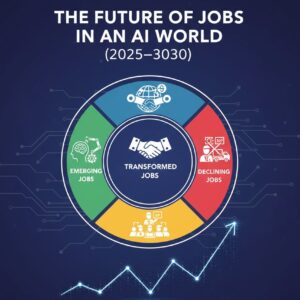
The Future of Jobs in an AI World (2025–2030)Once you stop chasing “the best path” and focus on usable understanding, learning becomes slower — but finally starts working.
Explore more categories:
https://bygrow.in/category/prompt-engineering-and-prompt-libraries/
https://bygrow.in/category/ai-in-marketing-seo-and-content-creation/